
Finding your wedding dress is a wonderful moment, but the dress you choose in the boutique is rarely the completely finished version you will wear on your wedding day.
Most wedding dresses need some form of alteration.
That doesn’t mean you’ve ordered the wrong size or that there is anything wrong with the dress. Bridal gowns are generally produced in standard sizes and then altered to fit your individual shape, height and proportions.
At The Bridal Affair & Curvy Bridal in Easingwold, near York, we are often asked what to expect from wedding dress alterations, how much can realistically be changed and when brides should start the process.
The simple answer is that alterations can make an enormous difference to the final fit of a gown, but they are not magic.
A skilled bridal seamstress can refine, reshape and personalise a dress, but choosing a gown that is fundamentally right for you in the first place will usually give you the best result.
When Should Wedding Dress Alterations Start?
For most brides, we recommend beginning wedding dress alterations around 8 to 12 weeks before the wedding.
That normally provides enough time for your first fitting, any necessary work and subsequent fittings without everything becoming unnecessarily rushed.
However, don’t wait until eight weeks before your wedding to start looking for a seamstress.
Experienced bridal seamstresses can become particularly busy during the main wedding season, so it is sensible to make contact much earlier and get yourself into their diary.
Your first actual fitting may still be closer to the wedding.
There is a good reason for this.
Bodies can change over many months, even when you aren’t deliberately losing or gaining weight. Altering a dress too early can sometimes mean having to alter it again later.
The aim is to find the balance between leaving enough time for the work and having the final fitting close enough to the wedding for the dress to fit as it should.
Do All Wedding Dresses Need Alterations?
Most do, even when the dress already appears to fit very well.
Very few brides happen to have exactly the same measurements and proportions as the standard size used by a bridal designer.
You might need only a small adjustment to the straps and hem, while another bride may need the bodice taken in, cups adjusted, the skirt shortened and the train bustled.
Even relatively minor alterations can transform how a dress looks.
A bodice sitting slightly too low, straps that are a little too long or a hem that isn’t quite right can affect the entire appearance of the gown.
The difference between a wedding dress that fits and one that fits properly can be considerable.
What Can Be Altered on a Wedding Dress?
A great deal can usually be changed, but how straightforward that change is depends heavily on the construction of the individual gown.
Taking a bodice in is very common. Straps can often be shortened, sleeves adjusted, cups changed and necklines refined.
Wedding dresses can also usually be shortened to work with your height and wedding shoes.
A bustle can be added to lift the train for your reception, and in many cases straps, sleeves or additional coverage can be added.
But the fact that something can technically be altered doesn’t always mean it is sensible or cost-effective to do it.
Removing and repositioning lace, beadwork or appliqué takes considerably more work than altering a simple seam on an unembellished gown.
Likewise, restructuring a heavily boned bodice is very different from making a small adjustment to a softer dress.
This is one reason we would rather help you find a gown that already gives you most of what you want than sell you a dress on the assumption that a seamstress can completely redesign it afterwards.
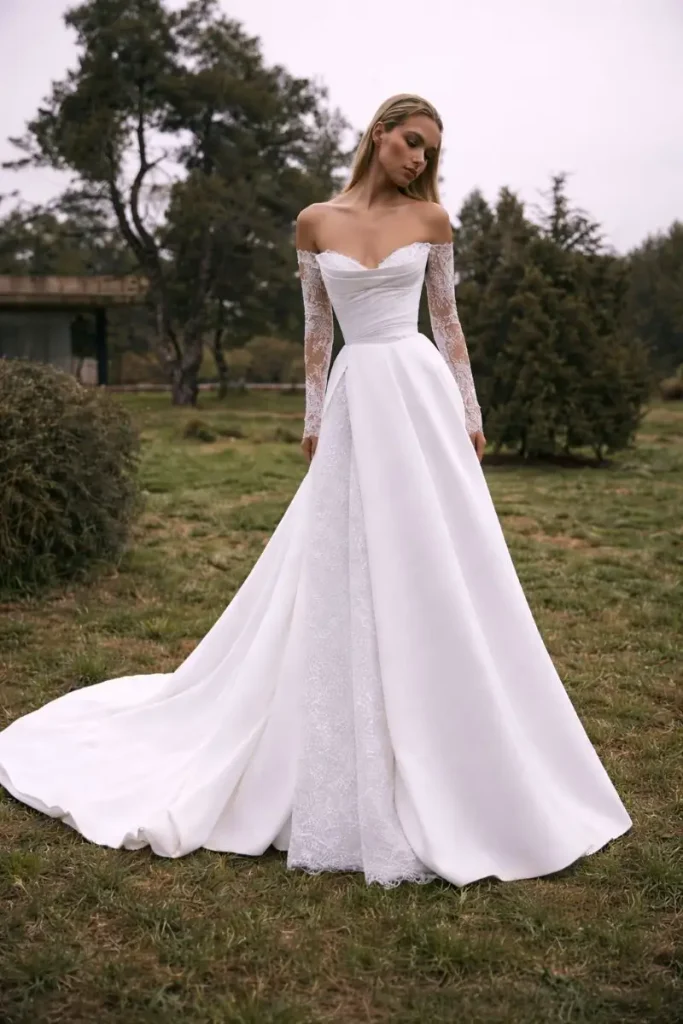
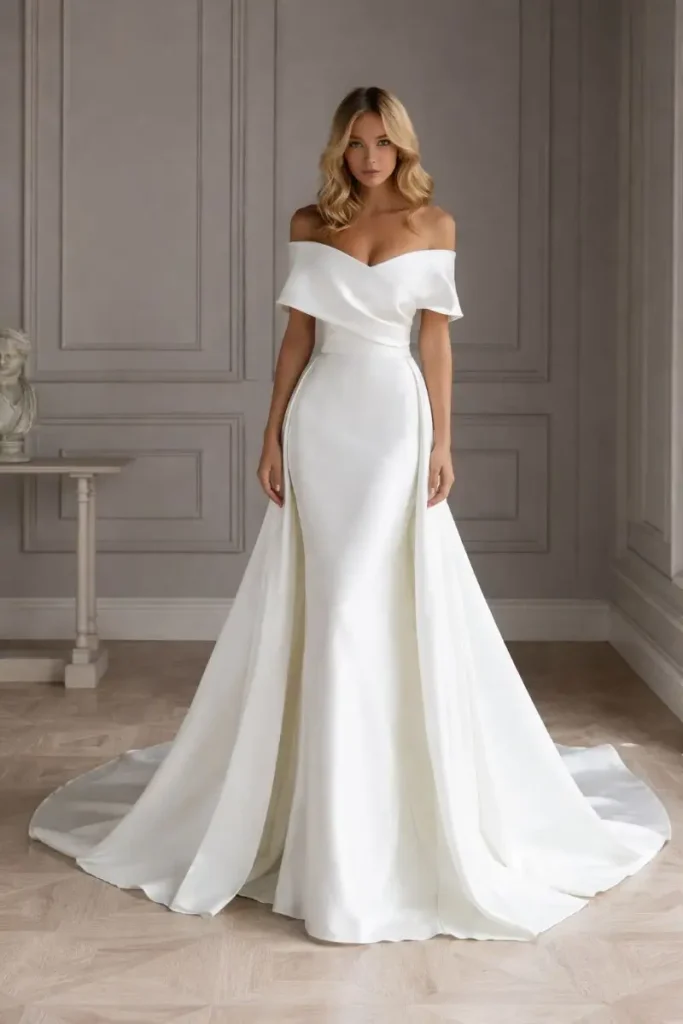
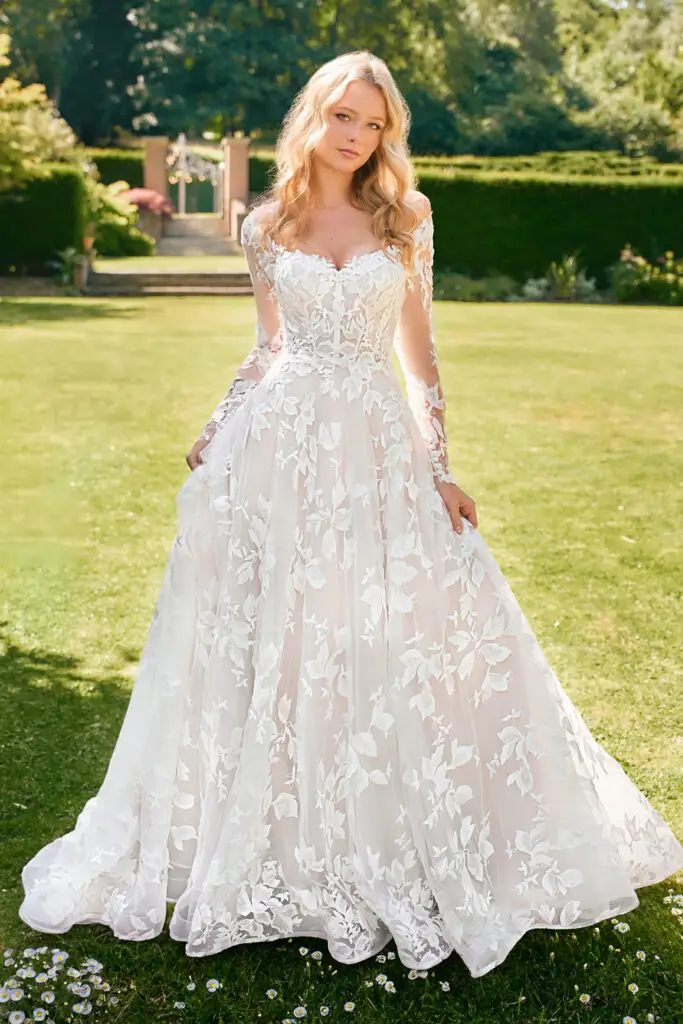
Can a Wedding Dress Be Made Smaller?
Yes, within reason.
Taking a wedding dress in is one of the most common alterations a bridal seamstress undertakes.
But there is an important difference between refining the fit of a dress and trying to reduce it by several sizes.
If too much fabric needs to be removed, seams, boning, lace placement and the overall proportions of the gown can begin to change.
That doesn’t mean a substantial alteration is impossible, but it may become a much more complicated and expensive piece of work.
This is particularly relevant for brides planning to lose weight before their wedding.
We completely understand wanting to lose weight, but we wouldn’t recommend deliberately ordering a wedding dress several sizes too small on the assumption that you will fit into it later.
It is usually much easier for a skilled seamstress to take a gown in than to create additional fabric where there simply isn’t any.
Choose your dress for the body you have when you order it and discuss any expected changes honestly with your bridal consultant and seamstress.
Can a Wedding Dress Be Made Bigger?
Sometimes, but this tends to be more limited.
The possibilities depend on the seam allowance inside the gown and how the dress has been constructed.
A seamstress may occasionally be able to release some fabric through the seams. A corset back can sometimes be introduced, or another solution may be possible depending on the style.
However, you should never buy a dress that is obviously far too small simply because somebody says it can easily be let out.
There may simply not be enough fabric available.
This is also why bridal sizing should not be treated like normal high-street sizing. The number on the label is much less important than ordering the size that gives the seamstress enough dress to work with.
How Much Can a Wedding Dress Be Shortened?
For many A-line and ballgown styles, shortening the skirt is relatively straightforward, although lace borders, scalloped hems and detailed fabrics can make the work more involved.
With fitted and mermaid wedding dresses, it can be more complicated.
The shape of these dresses relies heavily on proportion.
A mermaid gown may be designed to remain fitted down the body before flaring dramatically around the knee. If a substantial amount of length has to be removed, simply shortening the hem may remove part of that flare.
The finished dress can then look noticeably different from the designer’s original proportions.
A skilled seamstress may be able to compensate for this, but it can involve considerably more work.
This is particularly important for petite brides.
If you are shorter, it doesn’t mean you cannot wear a mermaid or fit-and-flare gown, but we need to look carefully at where the flare begins on you, not where it begins on the six-foot model in the designer photographs.
Alterations can refine proportions, but they cannot always completely redesign them.
Can Sleeves or Straps Be Added to a Wedding Dress?
Often, yes.
Adding sleeves or straps can be a really effective way to personalise a wedding dress, and it can completely change the look and feel of a gown.
Many wedding dresses can work beautifully with separate sleeves, detachable straps or added lace details, and we have a selection of separate sleeve options in store that can be paired with a number of our gowns.
This means you do not necessarily need to find a dress that already has sleeves if you love everything else about it.
The important thing is making sure the added sleeve or strap works with the neckline, bodice and overall style of the gown. Some dresses adapt very naturally, while others may need a little more thought to keep the finished look balanced.
A simple strap or soft detachable sleeve is often relatively straightforward, while creating a fully fitted long sleeve may involve more work from the seamstress.
If sleeves are important to you, let us know during your appointment. We can show you gowns that already include them, dresses that work particularly well with separate sleeves, and different options that allow you to create the look you want without ruling out a dress you otherwise love.
Can the Neckline of a Wedding Dress Be Changed?
Small changes are often possible.
A neckline can sometimes be softened, lowered slightly or given additional coverage depending on how the bodice has been made.
Illusion panels and modesty pieces can also sometimes be introduced.
Major neckline changes are different.
The neckline is often closely connected to the structure of the entire bodice, particularly when boning, cups and corsetry are involved.
Changing it dramatically may mean rebuilding a significant part of the dress.
Before buying a gown while thinking, “I love everything except the neckline — we’ll just change that”, it is worth finding out exactly what would be involved.
Sometimes the alteration is easy.
Sometimes finding another dress is the better answer.
What About a Wedding Dress That’s Too Big Around the Bust?
Bust fit is one of the areas where bridal alterations can make a particularly noticeable difference.
The cups may need changing, the bodice may need taking in, straps may need shortening or the position of the bust support may need adjusting.
Good bridal alterations aren’t simply about making the dress tighter.
The aim is to make the gown sit correctly on your body so the internal structure is actually doing its job.
This is particularly important for fuller-busted brides.
A well-fitted structured bodice should provide support from the body of the gown rather than relying entirely on the straps.
When everything is sitting where it should, the dress will normally look better and feel considerably more secure.
Should I Lose Weight Before My Wedding Dress Alterations?
You don’t need to lose weight for your wedding dress.
If you are already making lifestyle changes for yourself, tell your seamstress so they can take that into account when planning your fittings.
What we would avoid is leaving alterations extremely late because you’re waiting to reach a particular weight.
That can create unnecessary pressure and may leave too little time for the work your dress actually needs.
Equally, having major alterations completed many months in advance while actively losing weight could mean they need repeating.
Talk openly to your seamstress.
They would much rather know what is happening than discover a significant change at the final fitting.
What Should I Take to My Wedding Dress Fitting?
Your wedding shoes are particularly important because heel height determines the finished length of your dress.
If you haven’t bought the exact shoes yet, you should at least know the heel height you intend to wear before the hem is finalised.
You should also bring the underwear or shapewear you expect to wear on the wedding day.
Different bras and shapewear can change your bust position and overall proportions, so changing them between fittings isn’t ideal.
In many structured wedding dresses, you may discover that you don’t need a bra at all.
Your seamstress can advise you once she sees how the gown fits and how much support is already built into it.
How Many Wedding Dress Fittings Will I Need?
There isn’t a set number.
A relatively straightforward alteration may require only a small number of appointments, while more extensive work may require several fittings.
The seamstress needs to be able to check each stage before completing the next.
Your final fitting is particularly important because this is your opportunity to walk, sit and move in the dress and make sure everything feels secure and comfortable.
A wedding dress shouldn’t only look beautiful while you are standing perfectly still in front of a mirror.
You are going to spend hours wearing it.
You need to be able to move in it too.
What Is a Wedding Dress Bustle?
A wedding dress bustle is a way of lifting and securing the train after the ceremony so it is easier to walk and dance in during the reception.
Depending on the dress, this might be a discreet fastening added by your seamstress, a hook-and-loop arrangement at the back, or a train loop that allows you to lift and carry the train more easily.
Train loops are a particularly simple and practical option, and we sell these in store for brides who want an easy way to manage their train later in the day.
The best solution depends on the weight, fabric and shape of your gown, as well as how long the train is.
Your seamstress can advise whether a bustle fastening is suitable, while a train loop can be a useful alternative or addition for moving around during the evening.
Whichever option you choose, make sure you know how it works before the wedding day. If your dress has a fastening at the back, take whoever is likely to help you to your final fitting if possible, or ask for a quick photograph or video showing exactly how it fastens.


How Much Do Wedding Dress Alterations Cost?
There isn’t a single standard cost because the amount of work varies enormously from one dress to another.
A simple hem and strap adjustment is very different from altering a heavily embellished bodice, moving appliqué, restructuring a skirt or adding sleeves.
The construction of the gown matters as much as the alteration itself.
This is why alterations are normally charged separately from the price of the wedding dress.
When planning your wedding dress budget, always leave something available for alterations rather than spending every penny of your bridalwear budget on the gown itself.
Your seamstress can give you a much clearer idea of cost once she has seen both you and the dress and knows exactly what work will be required.
Are Wedding Dress Alterations Included at The Bridal Affair?
No.
Alterations are separate from the purchase price of your wedding dress.
At The Bridal Affair & Curvy Bridal, we can recommend experienced independent bridal seamstresses who regularly work with wedding gowns, but they operate separately from the boutique.
Appointments, alteration costs, fitting dates and payments are arranged directly with your chosen seamstress.
We think this gives brides clarity from the beginning rather than building an estimated alteration cost into the price of every dress when every bride’s requirements are different.
Should I Choose a Dress Because It Can Be Altered?
This is where we would urge a little caution.
Almost every wedding dress can be altered in some way.
That doesn’t mean every dress should be bought with a long list of changes already planned.
If you love the dress but want the straps shortened, the waist refined and the hem adjusted, that is completely normal.
If you want to change the neckline, alter the back, reshape the skirt, remove layers and completely change the silhouette, it may be worth asking whether it is actually the right dress.
Adding detachable sleeves or straps is a little different because these can often be used deliberately to personalise a gown rather than correct something you dislike about it.
Alterations should ideally take a beautiful gown that already works for you and make it fit beautifully.
They shouldn’t have to turn the wrong wedding dress into the right one.
Wedding Dress Alterations Are About More Than Size
One of the biggest misconceptions about wedding dress alterations is that they are simply about making a dress smaller.
Good alterations are really about proportion.
The waist should sit in the right place. The bust should be properly supported. The straps should sit correctly. The skirt should fall as the designer intended, and the hem should work with your height and shoes.
This is why two brides wearing exactly the same dress size may require completely different alterations.
Your height, torso length, bust, waist and hip position all affect how a gown sits.
The alterations process is where a standard-sized designer gown becomes your wedding dress.
Frequently Asked Questions About Wedding Dress Alterations
When should I start wedding dress alterations?
For most brides, around 8 to 12 weeks before the wedding is a good time to begin fittings. However, contact your chosen bridal seamstress considerably earlier so you can secure space in their diary, particularly during busy wedding months.
Does every wedding dress need alterations?
Most wedding dresses need at least some adjustment. Even when the size is very close, straps, bust fit or hem length often need refining to achieve the finished fit.
Can a wedding dress be taken in if I lose weight?
Usually, yes, within reasonable limits. How much a gown can be reduced depends on its construction, seams, boning and detailing. Significant changes may require more extensive work.
Can a wedding dress be made bigger?
Sometimes. A seamstress may be able to release fabric from the seams or suggest another solution, but the possibilities depend entirely on the gown. There is much less flexibility if there is no spare fabric available.
Can sleeves be added to a wedding dress?
Often, yes. Many gowns work beautifully with separate or detachable sleeves, straps or added lace details. We also have sleeve options in store that can be paired with a number of our wedding dresses, so you don’t necessarily need to choose a gown that already has sleeves.
Can a mermaid wedding dress be shortened?
Yes, but shortening a mermaid gown can be more complicated than shortening an A-line skirt. If a lot of length needs to be removed, the position and proportions of the flare may also need attention.
Do I need my wedding shoes for alterations?
Yes, or at least shoes with exactly the same heel height. The seamstress needs the correct height before finishing the hem.
Are alterations included in the price of my wedding dress?
At The Bridal Affair, alterations are arranged separately with an independent bridal seamstress. This is because every gown and every bride requires a different amount of work.
Getting the Perfect Fit for Your Wedding Day
Wedding dress alterations should not be an afterthought.
They are the final stage in turning the dress you chose in the boutique into the gown you will actually wear down the aisle.
Choose a dress that works with your body and proportions from the beginning, allow enough time for alterations, and use an experienced bridal seamstress who understands the structure and fabrics involved.
At The Bridal Affair & Curvy Bridal in Easingwold, near York, we’ll always be happy to talk you through what a gown may need and guide you towards trusted independent seamstresses when the time comes.
Because finding the dress is only part of the process.
Making it fit beautifully is what finishes it.


